

Philosophy
Learners learn most effectively from experiences that are engaging, meaningful, challenging, and relevant, and from teachers who facilitate construction of knowledge from such experiences.
Mission
UP NISMED, as an extension arm in science and mathematics education of the University of the Philippines Diliman, shall serve as the national center for improvement and reform of science and mathematics education at the basic and teacher education levels. In particular, it commits to:
- Conduct research in science and mathematics education;
- Develop and disseminate research-based science and mathematics curriculum materials;
- Develop and implement innovative and research-informed programs for teachers and teacher educators in science and mathematics;
- Develop and implement emerging programs that will promote science and mathematics literacy among the citizenry; and
- Provide research-based inputs to policy formulation in science and mathematics education.
Vision
A regional center of research and development advocating quality science and mathematics teaching and learning at the basic and teacher education levels.
Core Values: Excellence, Integrity, and Social Responsibility
As a member of the UP community, we at UP NISMED strive to fulfill our mandate with excellence – to do our best as we engage in research, develop quality resources, and conduct professional development programs.
We pledge to make every effort to act with integrity as we perform our duties – to be accountable, to be honest in word and in deed, and to be respectful of the perspectives of others, especially during moments of diverging points of view.
As we work continuously toward the improvement of science and mathematics education in the Philippines, we commit to be mindful that what we do at UP NISMED should be for the benefit of the whole society.
Research and Extension Agenda for 2023-2027
Contribution to the Advancement of Science and Mathematics Education
NISMED, then called Science Teaching Center (STC), was the first curriculum research and development institution to develop and publish textbooks appropriate for Filipino students and real-life contexts. Its first generation textbooks with accompanying teacher’s guides (1964 to 1973) were adaptations of American and British-developed materials in keeping with research studies that learning is facilitated if objects of study are familiar, relevant, and occur in the immediate environment. It also developed sourcebooks focused on Philippine resources (e.g., Plants of the Philippines).
Due to its leadership in curriculum development and research, STC was renamed the Science Education Center (SEC) in 1967 and made a permanent unit of the University of the Philippines in 1969 by the Board of Regents with an additional budget from the Science Fund under Republic Act 5506. The Act also decreed that “appropriate texts and materials produced and published by the Center” be prescribed as textbooks in public schools. In the mid-70s, it was designated as the Curriculum Development Center for Science and Mathematics under the World Bank-funded National Textbook Project to develop elementary and secondary textbooks and teachers’ guides in science and mathematics. These so-called second generation textbooks came out in the ’80s. The funding included a grant of a building to house SEC staff.
SEC also served as the lead agency in a network of Regional Science Teaching Centers supported by UNICEF and the National Science Development Board (now the DOST-SEI) under the Science Education Development Project which built up faculty and facilities of institutions within the network. The number of institutions in this network grew through the years and many have recently become centers of excellence in their part of the country. NISMED continues to receive requests for technical and human resource support from these institutions.
Parallel to the development of research-based curriculum materials, NISMED conducts professional development programs to orient science and mathematics teachers on the use of the materials and to impart a learner-centered, hands-on philosophy through strategies that develop higher-order thinking skills on the part of students as they construct the science and mathematical concepts themselves.
NISMED continues its important functions as a curriculum research and development and extension unit of the University, disseminating its publications through its teacher training programs at the national, regional, division, district, and school levels as well as in its public lecture series.

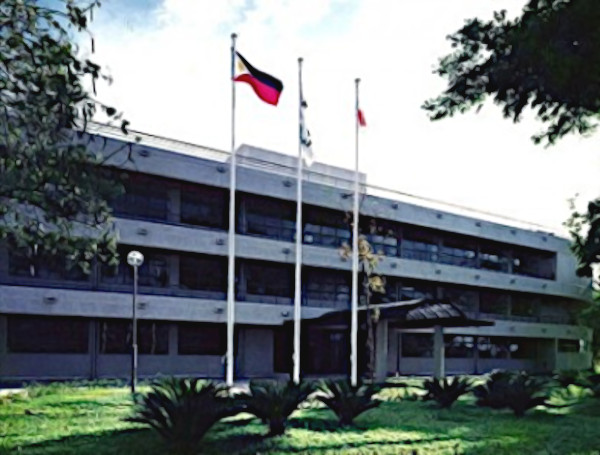
Due to its capabilities in research, curriculum development, and teacher training, NISMED was selected in the late 80’s by the Japanese and Philippine Governments to be the Project Manager of the National Learning Resource Center for Teacher Training in Science and Mathematics, a package-type grant from Japan which included construction of the Science Teacher Training Center building and a hostel, complete with equipment and furniture. The NISMED complex soon after became the venue for the Science and Mathematics Education Manpower Development Project (SMEMDP) through which NISMED staff underwent training under Japanese experts and in turn conducted national training programs for participants from all the regions of the country. Through this project (1994 to 1999) another bountiful crop of sourcebooks, posters, improvised equipment, and nonprint materials were produced by NISMED. The practical work approach to teaching science and mathematics, exemplified by hands-on, minds-on and hearts-on activities for the learner, was widely promoted and disseminated by NISMED through this project.
To this day, NISMED leads in introducing unique and innovative programs for the betterment of science and mathematics education in the country. This is accomplished through its research-based print and nonprint materials and its professional development programs. The latter have been conducted on-site to reach the teachers in their own communities and through mentoring and collaborative schemes that build mastery of concepts and skills, as well as confidence and empowerment.
Award Received
For six decades, UP NISMED has engaged in research, curriculum development, teacher training in science and mathematics education, and extension work and has been recognized and awarded the following:
- 2025 Gawad Tsanselor para sa Natatanging Programang Pang-Ekstensiyon, UP NISMED’s Stargazing Program
- 18th Gandingan Awards for Most Development-Oriented Science and Technology Program, UP NISMED’s Go Teacher Go!
- 18th Gandingan Awards for Most Development-Oriented Educational Program, UP NISMED’s Go Teacher Go!
- 2023 Gawad Tsanselor para sa Natatanging Programang Pang-Ekstensiyon, UP NISMED’s KaSaMa Teachers Community
- 2019 Gawad Tsanselor para sa Natatanging Programang Pang-Ekstensiyon, UP NISMED’s Lesson Study Program
- Finalist — 2nd Parangal para sa Programang Pang-ekstensiyon ng mga Yunit na Di-Nagkakaloob ng Digri (2017), UP NISMED’s Go Teacher Go!”
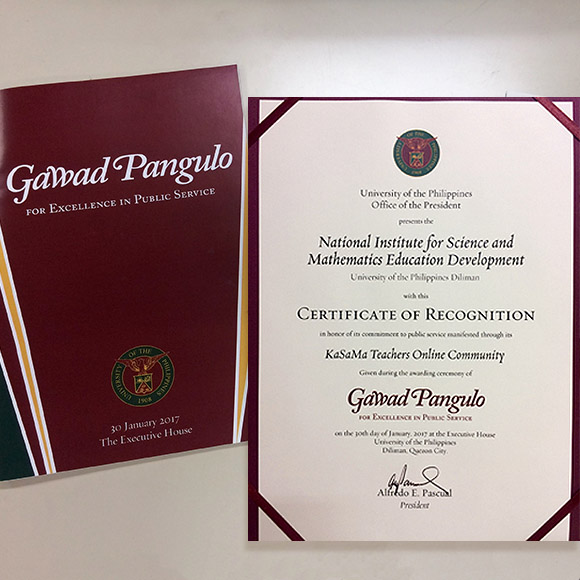
- Finalist — Gawad Pangulo for Excellence in Public Service (2016), UP NISMED’s KaSaMa Teachers Online Community
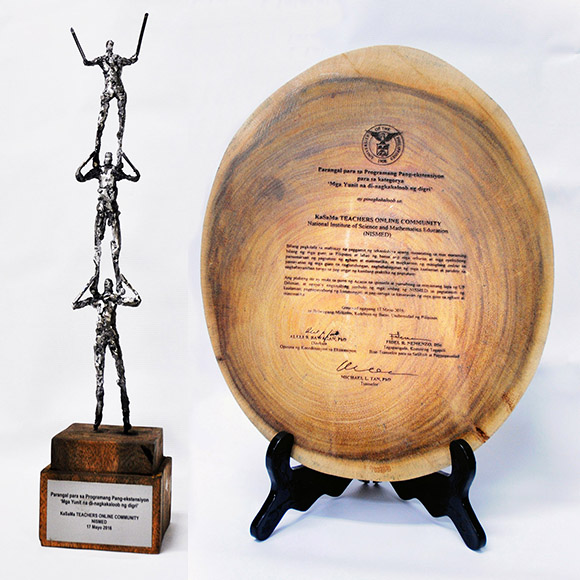
- Winner — 1st Parangal para sa Programang Pang-ekstensiyon ‘Mga Yunit na Di-nagkakaloob ng Digri’ (2016), UP NISMED’s KaSaMa Teachers Online Community
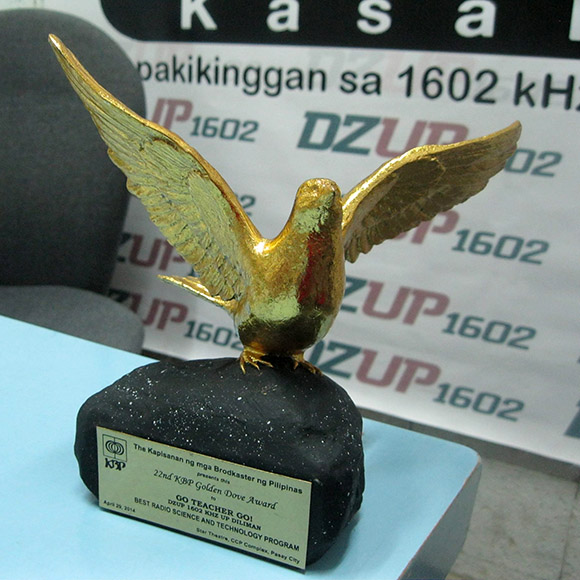
- 22nd KBP Golden Dove Awards – Best Radio Science and Technology Program (2014), UP NISMED’s Go Teacher Go!
- 2008 Gawad LIDER for Exemplary Leadership-Institutional Category by the Department of Science and Technology-Science Education Institute (DOST-SEI) in recognition of its consistent demonstration of leadership qualities in “the pursuit of an idea and a performance that generated nationwide impact on public interest in the field of science education”
- 2006 Best Educational Program-Radio for “Titser’s Iskul on the Air: Third Course” aired over DZMM in the radio program, Bago Yan Ah!, Catholic Mass Media Awards
- Designation of NISMED by DOST-SEI as the National Center for Research and Innovation in Science and Mathematics Education (2005)
- 2001 Gawad Chanselor sa Pinakamahusay na Yunit sa Gawaing Ekstension
- 1996 Gawad Chanselor sa Pinakamahusay na Yunit na Pansaliksik at Pang-Ekstensyon
- 1984 Outstanding Extension/Community Service Award by the President of the University of the Philippines